Dear Friends,
Springtime in Washington, DC, a city that exudes a sense of timelessness and tradition, is like none other. Historic cherry blossoms and a riot of multicolored azaleas enrich the city, as they do every year with reliable consistency. They and the historic buildings they adorn are the legacy of our ancestors who planted, designed and constructed this enduring beauty to last well beyond their lifetimes. But change is underway.
The assassination attempt on April 25 at the White House Correspondents’ Dinner may be the event that turns the tide on the controversial 90,000 square foot ballroom that has been proposed to replace what was once the East Wing of the White House. Some members of Congress are now saying its construction is necessary because the presidency requires a space of this size to assure that such public gatherings at places like the Washington Hilton never occur again. Sadly, they are implying that being part of the city’s pulse is a threat to the safety of executive power.
Nevertheless, it is increasingly likely that sooner or later some kind of significant structure will be approved to replace the demolished East Wing. That addition, no matter what its size, will be transformative. It will dominate the south side of Lafayette Square, bringing with it new calculations on how to create an aesthetic that will sit comfortably with the square and the park. We owe this symmetry to those who so carefully designed the city of Washington, DC, most notably Pierre L’Enfant and others.
This transformation should encourage us to go more slowly on the other proposals and plans for that side of the park. There are two buildings of historic importance on either side of the White House. To the east is the US Department of Treasury Building completed in 1869 (it took 33 years to build) and to the west the Eisenhower Executive Office Building (EEOB) finished in 1888, 17 years after construction began. Both are national landmarks; and, in keeping with other buildings of their time, they are both compatible shades of gray granite—sturdy, solid and indestructible.
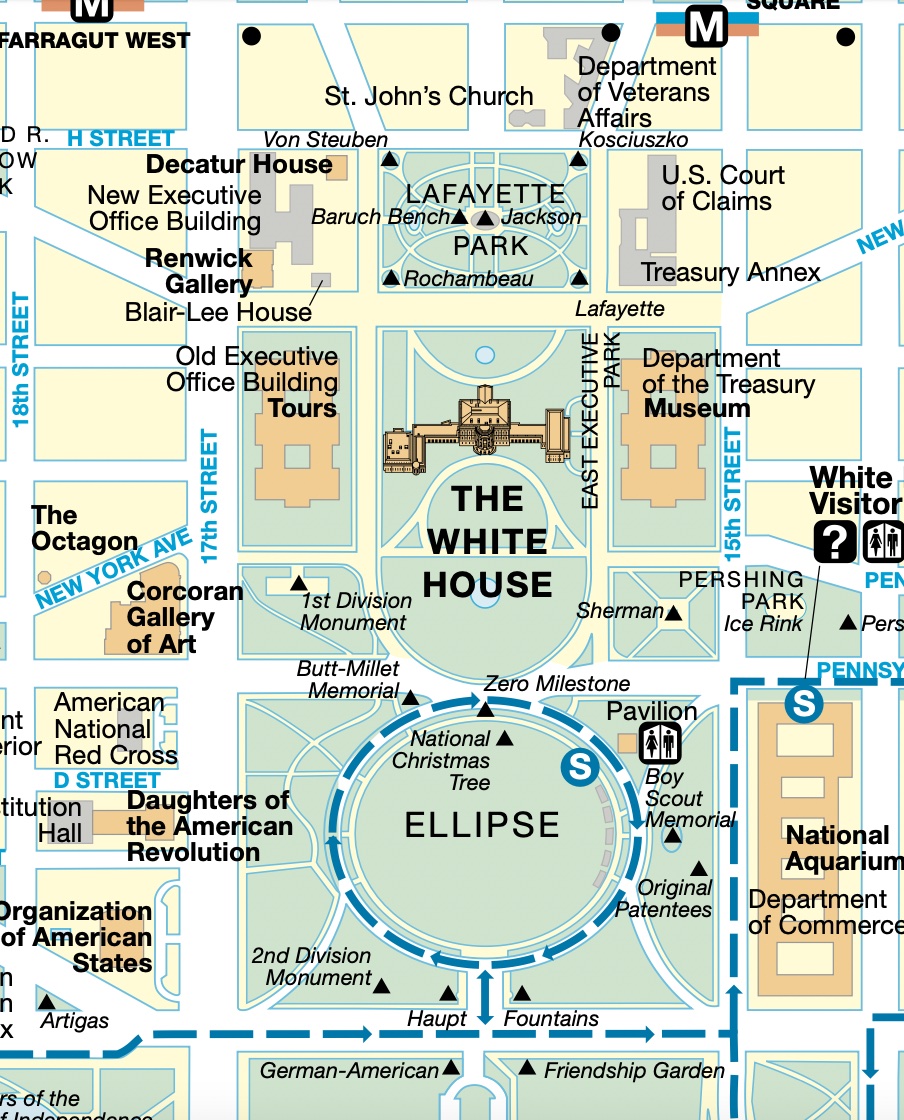
There is a proposal in place now to paint the Eisenhower Executive Office Building “bright white”—a step that is irreversible. And such a transformation, before the completion of the ballroom, risks creating a lopsided effect from the two other massive structures that would be different in color.
Here are a few of the questions we should ask ourselves first:
1) When the ballroom is undertaken, what will the new shape of the White House look like in relation to the park and the adjoining streets? Assuming this project is adopted, wouldn’t it be better to calibrate these two buildings on either side of the Executive Mansion in relationship to the new addition?
2) How will those three buildings look from the park and from the Ellipse if only the EEOB and the White House are painted white, but the Treasury Building is not? Will there be a side-heavy effect?
3) Or should the EEOB and Treasury be left as they are—allowing the White House itself to stand out?
4) And, even more important, what are the ramifications of painting granite? What will the cost be in terms of maintenance?
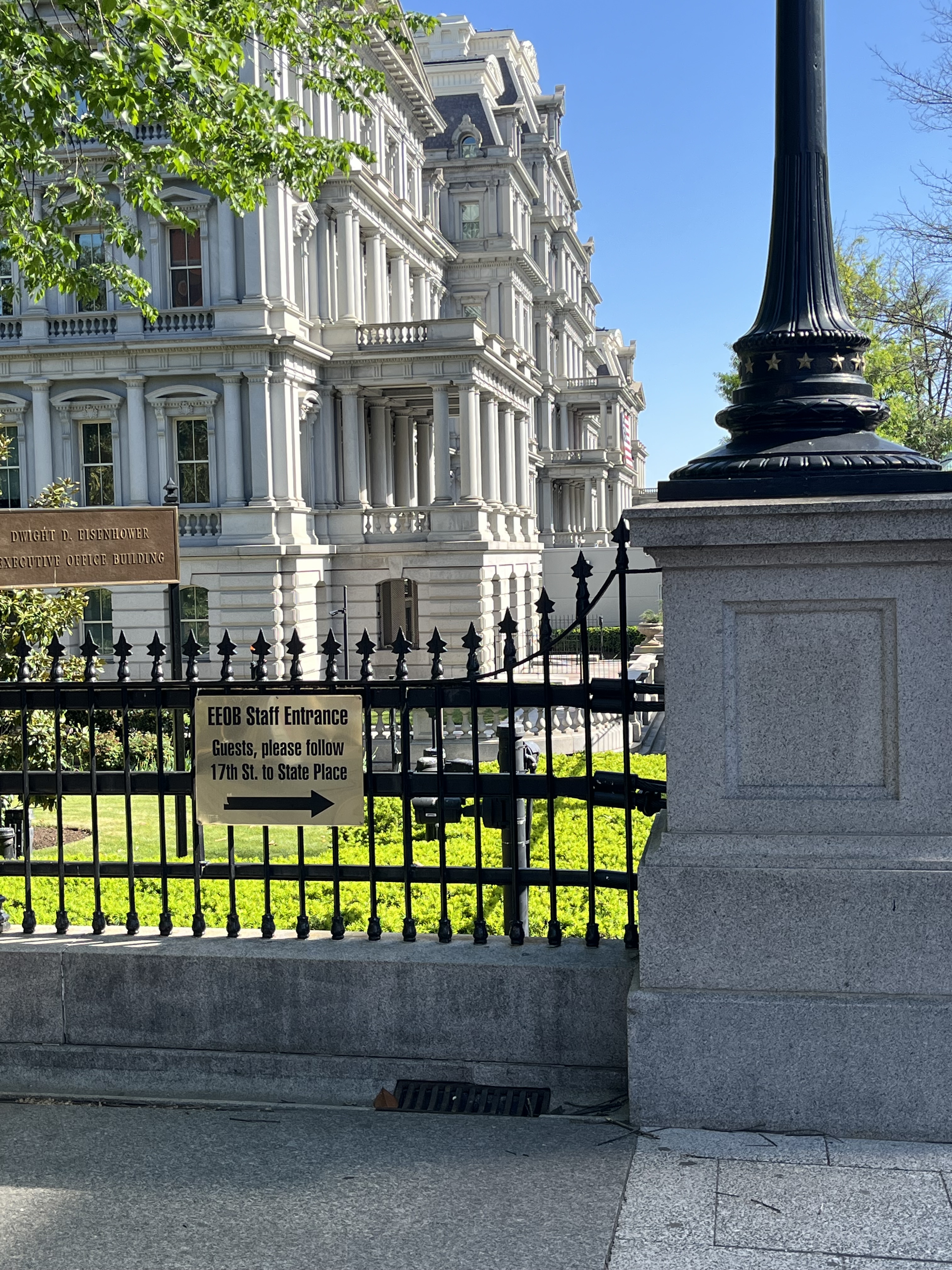
Currently, none of these questions have been resolved; but there is urgency around whether or not the EEOB should be painted. All of us should be gratified that the administration understands the importance of maintaining this extraordinary building—one of the four finest examples of Second Empire period architecture in the country. However, many renowned experts in structural engineering and architecture are deeply concerned that any paint will significantly impact the lifespan of the building. The Federal government also advises against painting granite for a range of reasons—most important because the paint traps moisture and can, over time, cause serious deterioration of the stone. Advocates for the change say they have a “silicate paint” that will mitigate those structural concerns. Expert opinion asserts that no paint will work due to the nature of its granite surface. So far, there has been no serious testing of the proposed paint’s so-called special qualities.
Also, the natural dust and dirt that accumulates on all buildings will be more obvious on a bright white surface. Once painted, like painted brick for instance, it can never be restored. Furthermore, to keep it from looking shoddy, the EEOB could only be maintained aesthetically if it is repainted regularly. Power washing granite is a fraction of the cost and lasts significantly longer, often twenty-five years between each washing. It is also easier to spot clean.
There is significant common ground for a solution to this dilemma. In keeping with the administration’s objectives to keep the building beautiful and find new ways to showcase it, these goals can be met without painting it or undermining the building’s structure. Designers say that there are many options, including a range of effective outside lighting and enhanced landscaping.
Fortunately, there is no need to rush to paint it. Despite the assertions that the EEOB has been neglected and needs to be repainted promptly, I walked around the EEOB several weeks ago and was impressed that the building appears to be well maintained. Please look at the pictures I took and have added to this website’s gallery. The building positively sparkles.
For most of my career I have had an office within easy walking distance of Lafayette Square. The way I gathered my thoughts over the years would be to sit on a park bench and cast my eyes on the statues and these historical buildings, imagining those who have gone before us. Please, let’s not make any irreversible decisions until we can assess the impact the White House ballroom extension will have on the aesthetics of this iconic area. Our predecessors still inspire awe through their exquisite craftsmanship and soaring artistic construction. Their heritage offers visual reassurance to the American people that our values are strong and untouchable, and that our capabilities and our resilience will weather any storm.
With my best wishes,
Susan


Thank you!!! I hope you are submitting this to the Post or the NYTimes.
Thank You Susan 🙏 This absurdity of changing Historical Structure and the History itself needs to be addressed. The actual destruction of this sacred place was out of line. The Historical process was bypassed and demolishing the building was done without proper consultation.
Let’s hope your thoughtful, just-in-time historic /architectural/practical cosiderations will be duly noted and in various ways implemented. And please, Mr Trump, go easy on the gold inside.
Perhaps the Trump Ballroom project should stay exactly in its present state, as a monument to “what happens when you tear down the old structure and dig a hole for the new one before getting the plans approved.”
Countervailingly Grant’s Tomb had some way untward / outlandish modification visited upon it @ 1.5 generations back.